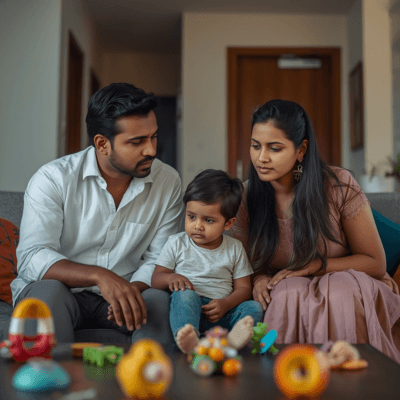
Every parent remembers waiting for that first word. When it takes longer than expected, worry creeps in — and the internet rarely helps. This guide walks through the ten signs speech-language professionals actually look for, in the order they usually appear.
💡 Tip
Early intervention before age 3 significantly improves language outcomes. Noticing a sign early is a reason to act, never a reason to panic.
1. Limited babbling by 9 months
Babbling — strings of sounds like "ba-ba" and "da-da" — is your baby practising the building blocks of speech. Most babies babble enthusiastically between 6 and 9 months. Very quiet babies who rarely experiment with sounds may benefit from a hearing check first, since hearing and speech develop hand in hand.
2. Not responding to their name by 12 months
By their first birthday, most babies turn when you call their name. If your child rarely responds — even when there are no distractions — mention it to your paediatrician. It can relate to hearing, attention, or social communication.
3. No first words by 16 months
"First words" don't need to be perfect — "mama" for mother, "wawa" for water all count. What matters is that your child uses a sound consistently to mean something. If there are no meaningful words by around 16 months, a screening is a sensible next step.
4. Not pointing or waving by 12–14 months
Gestures come before words. Pointing at a dog, waving bye-bye, raising arms to be picked up — these show your child understands communication even before they can speak. Missing gestures is one of the signs professionals weigh most heavily.
5. Fewer than 50 words by age 2
By the second birthday, most children can say around 50 or more words and are starting to combine them. Children who say noticeably fewer are often called "late talkers." Many catch up on their own — but there is no reliable way to know in advance which children will, so a professional's opinion is valuable.
6. No two-word phrases by 24 months
"More milk." "Daddy go." "Big car." These little combinations are a big milestone: they show your child is learning grammar, not just words. If they haven't appeared by around two years, discuss it with a professional.
7. Difficulty following simple instructions
By 18 months, most toddlers can follow simple, single-step requests like "bring your shoes" (without you pointing). Trouble understanding language — called receptive language difficulty — matters at least as much as trouble speaking.
8. Losing words they once had
If a child stops using words or skills they previously had, at any age, arrange a professional evaluation promptly. Regression is uncommon and always worth investigating — even when everything else seems fine.
⚠️ Important
Consult a Speech-Language Pathologist promptly if your child loses previously acquired speech or social skills. Don't wait to see if it comes back.
9. People outside the family can't understand them
By age 3, unfamiliar listeners should understand most of what your child says; by 4, nearly all of it. If strangers regularly can't understand your 3-year-old, a speech sound assessment can pinpoint exactly which sounds need help.
10. Frustration around communicating
Tantrums that consistently follow failed attempts to communicate — pointing, pulling you, then melting down — often signal that understanding is racing ahead of expression. This gap is exactly what speech therapy is designed to close.
What to do next
If one or more of these feels familiar, take a structured screening rather than worrying alone. A good screening asks about all the areas above and gives you a clear picture of where your child stands compared with age expectations. Whatever the result, talking, reading, singing and playing together every day is the most powerful language therapy there is — and it's free.